Dynamic Website Development in Mumbai — Built to Grow, Built to Last
There is a moment most Mumbai business owners recognise, even if they cannot immediately name it. They built a website a year or two ago. It looked good at launch. Their developer did a decent job, or at least a passable one. But now, every time they need to update something — a new service, a team member who left, a phone number that changed — they have to call someone, wait, follow up, maybe pay again for something that should take fifteen minutes.
The business has moved forward. The website has not.
This is the moment that brings most people to dynamic website development. Not a grand strategy decision, but a practical frustration: the website is not keeping up.
At The Web Decor, we have been solving this problem for Mumbai businesses for over ten years. We build dynamic websites — CMS-powered, database-driven, fully updatable — that give you control over your content without making you dependent on a developer for every small change. Websites that load fast, rank in Google, look like they belong to the businesses they represent, and continue to serve those businesses as they grow.
This page explains everything you need to know about dynamic website development in Mumbai — what it is, when you need it, what platform is right for your situation, what the process looks like, and what separates a dynamic website that works from one that quietly creates problems for years.


What Is a Dynamic Website — Really
The term gets used loosely, so let us be precise.
A dynamic website is a website where the content is stored in a database and assembled when a visitor requests a page. Instead of serving a fixed HTML file — which is what a static website does — a dynamic website's server runs a script, queries the database for the relevant content, builds the page, and sends it to the visitor's browser. This happens in fractions of a second, invisibly to the user.
The practical consequence of this architecture is that the content and the design are separated. The structure of the page — its layout, its fonts, its visual language — is defined by the theme or template. The content — the text, the images, the data — lives in the database and can be changed through an admin interface without touching a single line of code.
This is what a Content Management System (CMS) is. WordPress is a CMS. So is Drupal, Joomla, and dozens of others. Custom-built PHP web applications can also function as dynamic websites with their own admin interfaces. The CMS is the layer that sits between the database and the website manager — translating the technical storage of content into a human-readable, editable interface.
When you log into the backend of a WordPress site and type a new blog post, update a service description, or upload a team photo, you are using the CMS. The changes you make are saved to the database and reflected on the live site immediately, without any developer involvement.
That is the essential promise of a dynamic website: content independence. The ability to keep your website current without depending on someone else to do it for you.
Static vs Dynamic — Choosing the Right Type for Your Business
This is the question we get most often, and it deserves a straight answer rather than a hedge.
A static website is the right choice if your content is largely fixed, your site has five to ten pages, you are not planning to blog or publish regular content, you do not need user accounts or logged-in functionality, and your primary goal is a fast, professional, low-maintenance digital presence. Static websites load faster, cost less to maintain, and are significantly more secure than dynamic sites when configured properly.
A dynamic website is the right choice if you have content that changes regularly — services, team members, news, pricing, product listings. If you want to publish blog posts as part of your marketing strategy. If you need user registration, login, or member portal functionality. If your site needs to integrate with third-party systems like CRMs, booking platforms, payment gateways, or inventory management tools. If you have multiple people who need to update different parts of the website. If you are building something that will need to scale and evolve meaningfully over the next three to five years.
A few real-world examples from our Mumbai client base: a coaching institute in Kandivali that updates its course schedule every month and publishes student success stories weekly — dynamic is correct. A physiotherapy clinic in Borivali that needs five pages explaining their services and location — static is probably correct. A real estate developer in Lower Parel with a hundred active property listings that change as units are sold — dynamic, definitely. A chartered accountant in Andheri whose website needs seven pages and a contact form — static will serve them better and cost them less.
We tell this to clients even when it means recommending the less profitable option for us. It is the right way to work, and it is the reason clients come back.
If you are genuinely unsure which applies to your situation, call us. We will ask a few questions and give you an honest answer. There is no charge for that conversation.

What Bad Dynamic Website Development Looks Like in Mumbai — And Why It Is So Common
Understanding what can go wrong with dynamic website development helps you ask the right questions when evaluating any agency, including us.
The most common failure mode is speed to delivery over quality of build. An agency or freelancer who builds quickly, charges modestly, and hands over something that looks finished tends to win the initial pitch. The problems surface later — sometimes weeks later, sometimes months.
Speed issues are the first sign. A WordPress site loading in four or five seconds on mobile is not unusual when it comes from an agency that has not configured caching, not optimised images, not removed unnecessary plugins, and not addressed database query performance. In a competitive search environment, this is catastrophic — page speed is a confirmed Google ranking factor, and a slow site gives up its rankings to faster competitors over time. We always address Core Web Vitals as part of every build.
Security incidents are the second common failure. WordPress sites that are not actively maintained — core updates applied, plugins updated, security monitoring in place — become targets for automated attacks within months of launch. The attacks are not personal. Bots crawl the web looking for known vulnerabilities in specific plugin versions or CMS releases, and they find them because the overwhelming majority of WordPress installations are not properly maintained.
CMS interfaces that nobody knows how to use are the third pattern. A developer who builds a dynamic website and hands it over without a proper training session is essentially delivering a product the client cannot operate. We have spoken to business owners who had WordPress websites for two years and had never logged into the backend because nobody showed them how and they were afraid of breaking something. The CMS advantage — content independence — was entirely unrealised.
Plugin conflicts and technical debt compound over time. A WordPress site with twenty-five plugins, no maintenance schedule, and an original developer who is no longer reachable becomes increasingly difficult and expensive to update as the gap between installed versions and current releases widens.
We see these situations regularly because clients come to us after experiencing them. Our response is always the same: audit first, understand what is salvageable and what needs to be rebuilt, and give the client a clear, honest picture before we recommend anything.

The Platforms We Build On — And When We Recommend Each One
Dynamic website development in Mumbai is not a single technology or a single approach. It covers a range of platforms, frameworks, and approaches, each with genuine strengths and genuine limitations. Our recommendation is always based on what is right for the specific business, not on what is most familiar or most profitable for us to build.
WordPress Development in Mumbai
WordPress powers approximately 43 percent of all websites on the internet. That market share exists because WordPress is genuinely capable — flexible enough to handle everything from a five-page business website to a complex publishing platform, extensible through a vast plugin ecosystem, and accessible enough that non-technical users can manage content without training in web development.
For Mumbai businesses that need a dynamic website with a real content management interface, WordPress development in Mumbai is usually the right starting point. It is particularly strong for businesses that plan to blog regularly, businesses with large amounts of structured content — team directories, service listings, case studies — and businesses where multiple team members need editing access with different levels of permission.
The caveat, and it is an important one, is that WordPress done poorly is one of the most problematic website investments a Mumbai business can make. We have seen the results: a website built from a purchased premium theme, populated with whatever plugins the developer happened to know, launched without proper security configuration, and left without any maintenance plan. Six months later, it is slow, it has been hacked once, and the client is too nervous to update anything because the last update broke the homepage layout.
This version of WordPress is unfortunately common in Mumbai's web development market because it is cheap to produce and looks superficially finished. Clients often do not discover the problems until months after launch, by which point the original developer is often unreachable.
Our WordPress development is a different thing entirely. We build custom themes from scratch — not purchased templates with your logo dropped in. We select plugins with genuine care, preferring fewer, better-maintained options over a bloated stack of convenience installs. We configure caching, image optimisation, and database management for performance. We set up security hardening as a standard part of every build. And we hand over a site that your team knows how to use, with documentation and support that does not evaporate after the invoice is paid.
Our WordPress work at The Web Decor covers business websites, coaching institute platforms, healthcare portals, restaurant websites with menu management, NGO and trust websites, multi-location business directories, news and editorial platforms, and portfolio sites for creative professionals. The common thread is that every project is treated as a custom build, with design and functionality matched to the specific business rather than adapted from a generic template.
PHP Web Development in Mumbai
Custom PHP web development in Mumbai is the right answer when your business has requirements that no off-the-shelf CMS can handle cleanly. When you need complex business logic — custom pricing engines, multi-step application workflows, real-time data integrations, specialised reporting systems. When performance at scale is a genuine requirement, not a theoretical concern. When the overhead of building on top of a CMS creates more complexity than it solves.
PHP remains one of the most widely deployed server-side languages in the world, powering platforms like Facebook, Wikipedia, and a significant portion of India's enterprise web infrastructure. When properly architected — with a clean separation of concerns, a well-designed database schema, efficient query patterns, and appropriate caching — a custom PHP application can handle large traffic volumes, complex data relationships, and demanding user interactions with reliability and speed that most CMS-based solutions cannot match.
Our PHP development team in Mumbai builds web applications for clients whose requirements go beyond what WordPress or Shopify can accommodate. This includes client portals for professional services firms, inventory and order management systems for manufacturers and distributors, quotation and billing tools for B2B businesses, custom booking and scheduling platforms for service businesses, data dashboards for businesses that need real-time reporting, and integration layers that connect disparate business systems through API architecture.
PHP projects are more complex, take longer to build, and cost more than CMS-based projects. They also require a more thorough discovery process, because the requirements need to be documented precisely before development begins. We manage this process carefully — detailed specification documents, architecture reviews, staged development milestones, and testing protocols that are rigorous enough to catch edge cases before they reach your users.
If you are considering a custom PHP build, the first conversation is about requirements. What exactly does this application need to do, who will use it, what data does it handle, and what systems does it need to connect with. From that conversation, we can tell you whether a custom build is genuinely the right call or a well-configured CMS can achieve what you need for significantly less investment.
LMS Website Development in Mumbai
A Learning Management System is a specific category of dynamic web platform worth separating out because the education sector in Mumbai is one of the largest and most competitive in India. Mumbai has thousands of coaching institutes, skill development centres, language schools, corporate training providers, and professional certification programmes — and a growing number of them are taking their content online. Our LMS website development in Mumbai covers all of these verticals.
An LMS website goes beyond a standard business website. It manages courses, lessons, modules, video content, quizzes, student progress tracking, certificates, and payment for course access. Done well, it gives a Mumbai education business the ability to teach hundreds or thousands of students simultaneously, automate enrolment and payment, track student progress, and generate certificates — all without additional staff overhead.
Our LMS development work uses platforms like LearnDash integrated with WordPress, or fully custom-built LMS solutions depending on the scale and complexity of the educational offering. We have built learning platforms for coaching institutes preparing students for competitive examinations, corporate skill development companies delivering compliance training, language schools offering structured course progressions, and independent educators building online course businesses.
If your education business is considering taking content online — whether as a pure online offering or as a hybrid supplement to classroom teaching — talk to us before you commit to a platform. The choices made at the start of an LMS project significantly affect what is possible as the platform grows.
How We Build Dynamic Websites - The Full Process
Dynamic website development at The Web Decor follows a structured process that has been refined across 850+ projects. The core stages are the same regardless of platform; what changes is the depth of each stage depending on complexity.

Discovery and Requirements Documentation
A dynamic website project requires a more thorough discovery than a static one, because the functionality requirements need to be understood precisely before design or development begins. We schedule a discovery session — usually one to two hours — to map out everything the site needs to do.
We cover content structure: what types of content exist, how they relate to each other, who creates and updates them, how frequently they change. We cover functionality: what custom features are needed, what third-party integrations are required, what user roles and permissions exist. We cover the business context: who the customers are, what they expect from the website, what the primary conversion goals are, and what the competitive landscape looks like.
From this discovery session, we produce a project scope document that describes the site's content types, functionality, platform recommendation, technical architecture, timeline, and cost. This document is the foundation of the project — everything that follows is built on it.

Architecture and Platform Setup
Before design begins, our development team configures the technical architecture. For WordPress projects, this means selecting and installing only the necessary plugins, configuring the hosting environment, setting up the development staging environment, and establishing the database schema for any custom content types.
For custom PHP projects, this stage is more extensive — defining the database architecture, planning the API structure, establishing the development framework, and reviewing the security model.
Custom Design
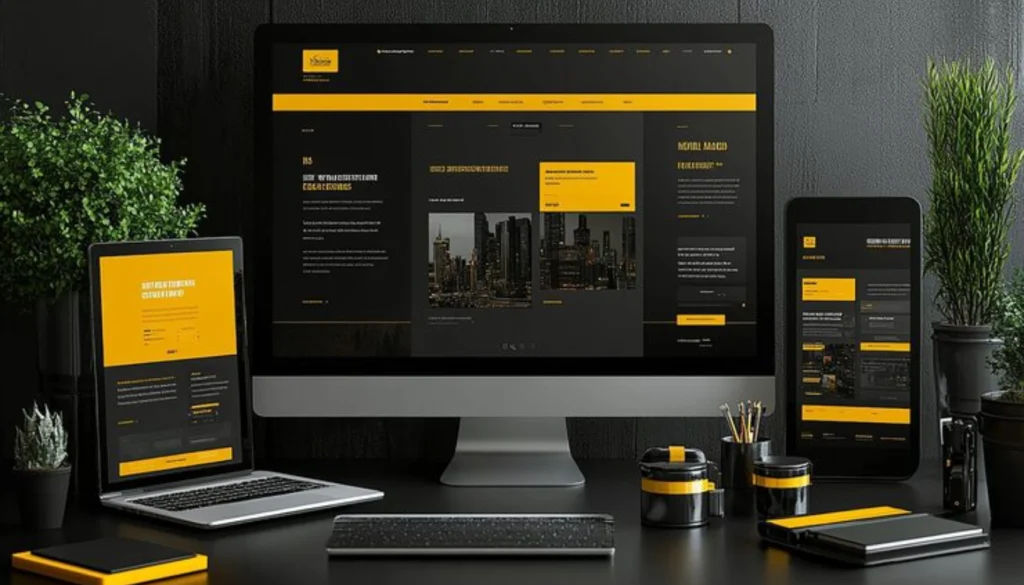
Every dynamic website we build begins with a custom design — not a theme, not a template. Our designers work from your brand assets and the content structure mapped in discovery to create a layout that serves your specific audience and drives the specific actions you want visitors to take.
We design key pages first — homepage, interior page template, blog listing, blog post, and any custom content type pages. These are presented for review and feedback. We iterate. We do not cap revision rounds at an arbitrary number and then charge extra — we iterate until the design is right.
Mumbai businesses across every industry have different design expectations. A legal firm in Nariman Point needs something that communicates authority without being cold. A restaurant in Bandra needs something that communicates warmth and appetite appeal instantly. A D2C brand in Andheri needs something that competes visually with the biggest consumer brands in the country. We understand these differences because we have worked across all of them.
Development
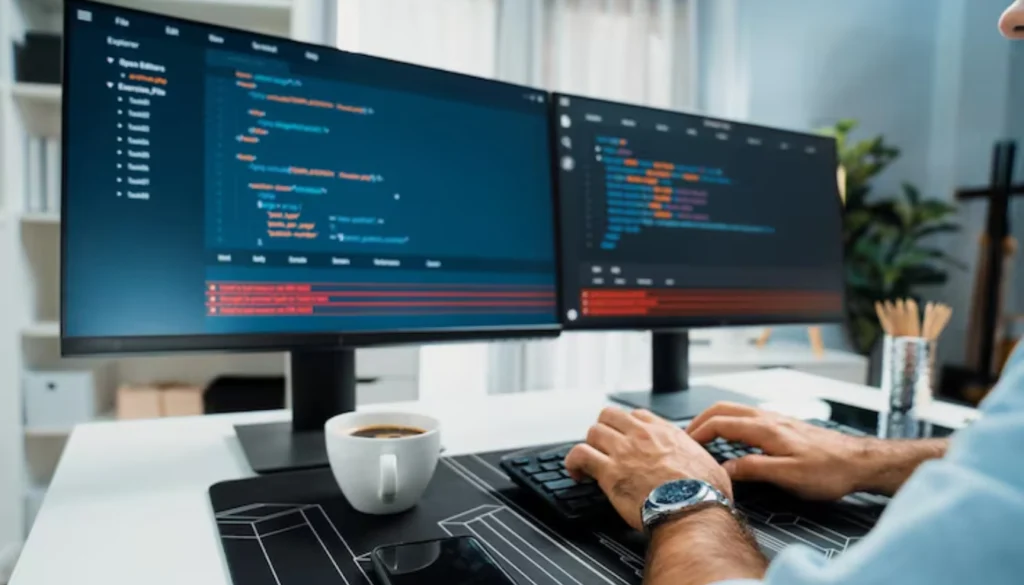
Our developers build to the approved design using clean, well-documented code. For WordPress projects, this means a fully custom theme built in PHP, HTML5, and CSS3 — not a child theme, not a page builder framework, but code written specifically for this project. For PHP applications, this means architecture that follows established patterns, with clear separation of business logic from presentation.
Performance is addressed throughout development, not at the end as a remediation exercise. Images are optimised at the point of upload. Caching is configured at the server level and within the application. JavaScript is loaded asynchronously where possible. Fonts are loaded efficiently. Database queries are reviewed for performance. We verify all pages score well across Google PageSpeed Insights. These decisions compound: a site where every element has been individually optimised for speed performs significantly better than one where performance is addressed as a single late-stage task.
SEO foundations are built into the development layer, not added as a plugin after the fact. Semantic HTML — correct use of heading hierarchy, proper landmark elements, meaningful alt text on images — is part of how we code. URL structures are planned in consultation with our SEO team before development begins, because URL structure decisions made early are difficult and risky to change later.

Content Population and Integration
Once development is complete, we populate the site with real content — your actual copy, your actual images, your actual data. We do not launch with placeholder text or stock photography unless specifically requested. Real content reveals real layout problems that placeholder content masks.
Any third-party integrations — payment gateways, CRM connections, booking systems, email marketing platforms, Google Analytics — are configured and tested at this stage. We verify that every integration works correctly across all the scenarios that real users will encounter.
Testing and Quality Assurance
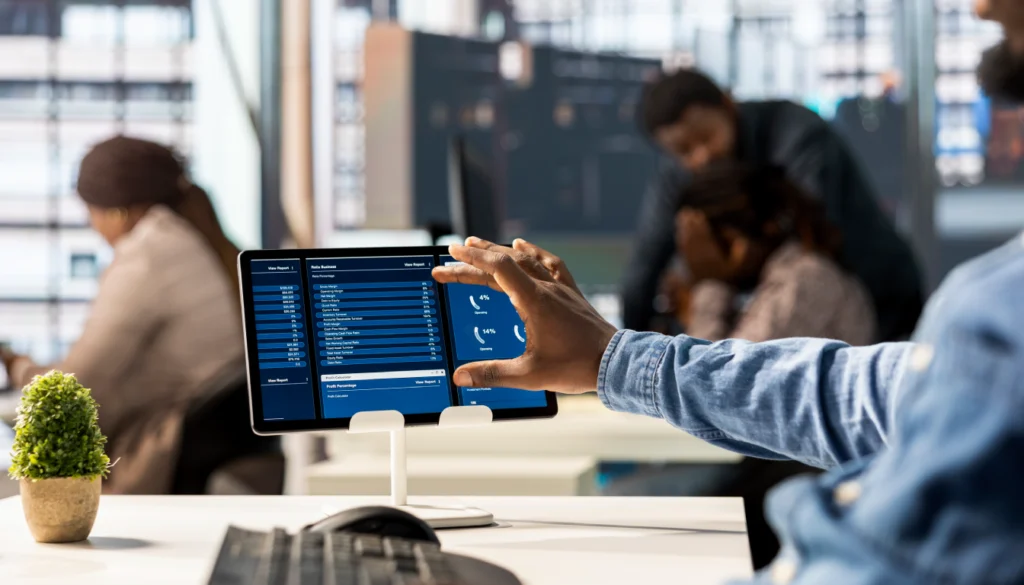
Before the site moves to client review, it goes through our internal QA process. Every page is checked across Chrome, Firefox, Safari, and Edge on desktop. Every page is checked on iOS and Android on actual devices. Every form is submitted and verified. Every link is checked. Every piece of custom functionality is exercised through all its edge cases.
We run Core Web Vitals tests through Google PageSpeed Insights and Lighthouse. We run security scans. We verify that the CMS editing interface works correctly for all the content types the client will need to update. Nothing moves to client review until it passes all of these checks.

Launch, Handover, and Post-Launch Support
We manage the full technical launch process: domain connection, DNS propagation, SSL certificate installation, server configuration, redirects from old URLs if required, Search Console verification, and sitemap submission.
The handover session is a genuine training session, not a five-minute walkthrough. We sit with your team — in person at one of our Mumbai offices or over a screen share — and walk through every part of the CMS your team will need to use. We provide written documentation covering the most common tasks, and we remain available for questions for thirty days after launch at no additional charge.
Dynamic Website Development Across Mumbai — What We Know About Different Business Environments
Our ten years of dynamic web development in Mumbai has given us genuine knowledge of how different parts of the city's business ecosystem operate, and how that context shapes what a dynamic website needs to do.
In the western suburbs — Andheri, Bandra, Malad, Kandivali, Borivali, Goregaon — we work most frequently with coaching institutes, healthcare practices, D2C consumer brands, IT and digital companies, and restaurants and hospitality businesses. Each of these categories has specific CMS requirements that differ meaningfully from each other. Coaching institutes need course and batch management. Healthcare practices need appointment booking and doctor directory management. D2C brands need product pages that connect with ecommerce platforms. Each of these is a different brief, and we build for the specific brief rather than the generic category.
In central Mumbai and South Mumbai — Dadar, Parel, Lower Parel, Worli, BKC, Nariman Point, Colaba — the client mix shifts toward professional services, financial companies, real estate developers, media companies, and luxury hospitality. The design expectations are different here, the content complexity is often greater, and the integration requirements are more demanding.
In the eastern suburbs and in Thane and Navi Mumbai, the dominant business types are manufacturing, B2B trading, healthcare, and education. These businesses often need websites that communicate professional credibility to corporate buyers and institutional clients who will evaluate the site before making contact. The CMS requirements here often include product catalogue management, technical specification sheets, and case study sections that need regular updating as new work is completed.
This local knowledge is the practical outcome of ten years of project work across the full geography of Mumbai's business community, and it shapes how we approach every new brief.
The Integration Advantage — Why Keeping Everything In-House Matters
The Web Decor is distinctive in Mumbai's web agency market for one specific reason: we offer website development, ecommerce development, SEO, branding, packaging design, product photography, and Google My Business management — all in-house, all done by our permanent team.
For dynamic website development specifically, the integration between development and SEO is particularly significant.
An SEO strategy that is developed in parallel with the website build — not after it — makes materially better decisions. The URL structure of a dynamic website is one of the most important SEO decisions, and it needs to be made before development begins. The way custom post types are named and structured in WordPress affects how content is indexed. The internal linking architecture of a dynamic site needs to be planned as part of the information architecture, not bolted on afterwards.
When the team doing your SEO campaign is the same team that built your website — or better, when those decisions are made in coordination from the start of the project — the result is a site that ranks faster, accumulates authority more efficiently, and does not require expensive technical fixes to correct decisions that were made without the SEO context in mind.


Industries We Serve With Dynamic Website Development in Mumbai
We work across virtually every industry active in Mumbai's commercial ecosystem. A few of the sectors where our dynamic development work is deepest:

Education and Coaching
Mumbai's education market is one of the most competitive in India. Coaching institutes preparing students for JEE, NEET, CA Foundation, UPSC, and MBA entrance examinations. Language schools. Professional skill development centres. Corporate training providers. The digital presence requirements are specific: course listings that need regular updates, batch and schedule management, faculty profiles, student testimonial sections, and enquiry forms that need to connect with CRM systems or WhatsApp for immediate follow-up.

Healthcare and Medical Practices
Healthcare websites in Mumbai carry a specific responsibility — they are the first point of contact for patients making decisions about their health. Dynamic functionality is often essential: appointment booking integrations, doctor profile management, department pages that need regular updating, patient education blog content, and location management for multi-branch practices.

Real Estate and Property Development
Mumbai's real estate market is one of the most active in India, and a dynamic website is almost always the right choice for developers, brokers, and property management companies. Property listings change constantly as units sell and new inventory is added. We build real estate dynamic websites with custom property listing management, search and filter functionality, and RERA compliance support.

Food, Restaurants, and Hospitality
Mumbai's restaurant and hospitality industry is enormous and fiercely competitive. Dynamic websites are essential for businesses in this category that need to keep their menu current, manage reservation systems, publish event information, update operational hours, and integrate with delivery platforms.
Manufacturing, Trading, and Export
Mumbai's industrial base — concentrated in Ghatkopar, Chembur, Thane, and Bhiwandi — produces businesses that are often technically excellent but digitally underrepresented. Dynamic websites for manufacturers and exporters need product catalogue management, technical specification sheets, and case study sections that can be updated as new notable contracts are completed.
Frequently Asked Questions
A static website serves fixed content — the same pages to every visitor, with no database involvement. It is fast, secure, and low-maintenance. A dynamic website generates pages from a database on demand and is managed through a CMS. The right choice depends entirely on what your business needs the website to do. If your content is largely fixed and you do not need user-facing functionality, a static site is often the better investment. If you need regular content updates, a blog, booking systems, user accounts, or any kind of structured content management, a dynamic site is the right call.
Costs vary widely based on what is being built. A custom WordPress business website — ten to fifteen pages, standard functionality, proper SEO setup — is a different project from a custom PHP web application with complex integrations and bespoke business logic. We quote every project individually after a proper discovery conversation. As a general reference, dynamic websites from The Web Decor range from approximately Rs 35,000 for simpler WordPress builds to Rs 2,00,000 and above for complex custom applications. We provide itemised quotes with clear scope definitions so you know exactly what you are paying for and why.
A standard dynamic WordPress website — custom design, typical business functionality, proper SEO foundations, and thorough testing — takes three to four weeks from approved scope to launch. More complex projects with custom post types, third-party integrations, or larger content volumes take four to six weeks. Custom PHP applications typically take six to ten weeks depending on complexity. Timelines are agreed at the start of every project and we hold to them.
WordPress is right when you need a capable CMS, reasonable development timelines, and a plugin ecosystem that handles common functionality at manageable cost. Custom PHP is right when your requirements are genuinely unique — when the complexity of building on top of a CMS creates more problems than it solves, or when you need performance, security, or functionality that off-the-shelf platforms cannot deliver well. We recommend based on your specific requirements, not on what is most familiar or most profitable for us to build.
A dynamic website carries inherent performance overhead compared to a static one. Managed badly, this overhead results in slow loading times. Managed properly — with server-side and application-level caching, image optimisation, efficient database queries, a well-configured hosting environment, and CDN delivery — a dynamic website can load in under two seconds on mobile and score well across Core Web Vitals metrics. Performance is something we address throughout development, not as a last-stage remediation.
Yes, absolutely — when built correctly. Every dynamic website we build includes semantic heading architecture, optimised meta titles and descriptions, image alt tags, canonical URL configuration, XML sitemaps, robots.txt setup, Core Web Vitals optimisation, and Google Search Console submission. SEO is not an add-on for us — it is part of how we build every site. If you want to pursue an active SEO campaign after launch — keyword-targeted content, link acquisition, local SEO, Google Business Profile management — we offer all of these as in-house services.
Yes. Every CMS we configure is set up for non-technical users. Adding a blog post, updating a service description, changing a team photo, adding a new location — all of this is done through the CMS interface without any coding. We provide thorough handover training and documentation.
Yes. We offer monthly maintenance packages that include security monitoring, plugin updates, content updates, performance checks, and priority support. Thirty days of post-launch support is included as standard in every project.
This is one of the most common enquiries we receive. Sometimes the right solution is a targeted audit and remediation — fixing the performance and security issues without rebuilding from scratch. Sometimes the original build is fundamentally flawed and the most economical path forward is a clean rebuild. We assess honestly, explain what we find, and give you a clear recommendation before we quote for any work.
Start the Conversation
If you are a Mumbai business considering a dynamic website — whether you are starting from scratch, rebuilding something that is no longer serving you, or migrating from a static site you have outgrown — the next step is a conversation with our team. View our client reviews or contact us today.
No obligation, no sales pressure. We talk, we understand your situation, we give you our honest assessment of what you need and what it will cost. If we are the right fit, we proceed together. If not, we will tell you.