

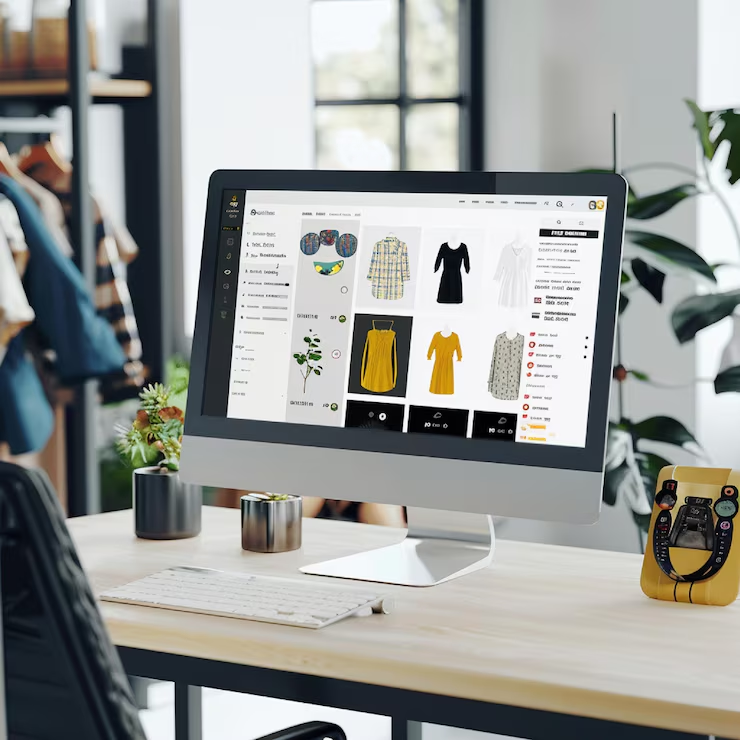

We create high converting websites tailored for your brand success

Search Now!
Contact Info
Location 1403/1404 Gold Crest Business Centre, opposite Manubhai Jewelers, Lokmanya Tilak Rd, Borivali West, Mumbai, Maharashtra
Contact Info
Location 1403/1404 Gold Crest Business Centre, opposite Manubhai Jewelers, Lokmanya Tilak Rd, Borivali West, Mumbai, Maharashtra

Why Shopify Works - and When It Is the Right Platform

Shopify is a fully managed ecommerce platform. This means Shopify handles the hosting infrastructure, the security patching, the software updates, and the core payment processing reliability. You do not manage a server. You do not worry about your store going down on a Saturday afternoon because a hosting plan ran out of bandwidth. You do not spend time applying updates that might break something. Shopify does all of that.

For a Mumbai-based brand that wants to focus on its products, its marketing, and its customers rather than on managing technical infrastructure, this is a meaningful advantage. The operational overhead of running a Shopify store is genuinely lower than running a self-hosted WooCommerce or custom PHP store - not because Shopify requires no attention, but because the infrastructure layer is handled.

Shopify is the right platform when your business sells physical products direct to consumers, when your product range fits within standard variant structures, when your team needs to manage the store without deep technical expertise, and when you want a platform with a mature app ecosystem that can handle most common ecommerce functionality without custom development.

Shopify is also particularly strong for businesses that need to scale. The infrastructure is built for high traffic and high order volume. A Shopify store doing ten orders a day can handle ten thousand orders a day on the same platform without a migration.

Where Shopify has genuine limitations: complex B2B pricing structures with multiple customer tiers and negotiated pricing are difficult to manage in Shopify's native architecture. Highly customised product configurators can be challenging. And businesses that need very specific custom business logic baked into the order management system sometimes find that Shopify's architecture constrains them. For these cases, a custom PHP ecommerce solution or WooCommerce may be more appropriate. We recommend honestly based on your requirements, not based on which platform we prefer to build on.

What Custom Shopify Development Means - and Why It Matters

Shopify makes it easy to launch a store by selecting a theme and adding your products. The themes range from free to a few thousand rupees. They are professionally designed, they are responsive, and they work. If you want to validate whether there is demand for your products online before investing in a proper build, a theme-based store is a reasonable starting point.

But a theme-based Shopify store is not a brand. It is a framework that thousands of other businesses are also using. Your customers can tell - not consciously, but in the aggregate experience of interacting with a store that does not feel specifically designed for the products it sells. And the conversion performance of a theme-based store - even a good theme, configured carefully - is consistently lower than a store where every element of the customer journey has been designed specifically for the brand and the customer.

Custom Shopify development means building the store the way a brand should be built - from a design that is specific to your brand identity, your product category, and your customer's expectations, coded into Shopify's Liquid templating language in a way that is performant, maintainable, and aligned with Shopify's best practices.

Custom Design - Starting From Your Brand

A custom Shopify store starts with design, not with a theme. We design the homepage, the collection page, the product page, the cart, and the checkout experience from scratch, making every layout and design decision based on three things: your brand identity, your product category, and what your specific customer needs to see and feel to convert.

A fashion brand selling premium ethnic wear needs a different design language from a health supplement brand. A jewellery brand needs different product page structure from a home decor brand. The hierarchy of information on the page, the way trust signals are presented, the approach to product photography layout, the handling of size and variant selection, the placement and wording of the call to action - all of these are category-specific decisions that a generic theme cannot make correctly for your specific business.

Read More

Liquid Theme Development - Clean Code for Real Performance

Shopify themes are built in Liquid, Shopify's templating language. Custom Liquid development - writing the theme code from scratch rather than modifying a purchased theme - gives us complete control over the output HTML and the performance characteristics of the store.

Theme modifications on purchased themes are messy. When you modify a purchased theme, you are adding code on top of code that was designed for a different purpose. Theme updates from the developer can overwrite your modifications or introduce conflicts. And the underlying code of a purchased theme carries weight from all the features it includes that you are not using.

Custom Liquid development produces leaner, more purposeful code. The pages load faster because they are not carrying the weight of unused features. The code is easier to maintain because it was written with your specific store's requirements in mind.

Read More

Section and Template Architecture - Built for Your Content Needs

Shopify's Online Store 2.0 architecture allows themes to be built with flexible sections that can be added, removed, and reordered on any page through the theme editor. Custom theme development gives us full control over how these sections are designed and what they can do.

For your team, this means a store that is genuinely editable through the Shopify admin without requiring developer involvement for routine content changes. New product collections can be featured on the homepage by dragging a section. Seasonal promotions can be added and removed. Content pages can be built and updated without touching code.

Read More

Indian Payment Integration - The Full Ecosystem

Shopify Payments is not available in India. Indian merchants use Shopify with a third-party payment gateway - Razorpay, Cashfree, PayU, or CCAvenue are the most commonly used.

Payment gateway integration is not simply a matter of installing a plugin and entering API credentials. The Indian payment ecosystem has specific requirements: the full range of UPI apps, net banking for all major Indian banks, debit card and credit card EMI, digital wallets, and the specific bank integrations that Indian customers rely on. A payment integration that does not surface UPI prominently, or that does not offer EMI options for higher-value purchases, will lose conversions from customers whose preferred payment method is not available.

We configure Indian payment gateways with the full payment method range configured, the checkout flow optimised for Indian customers, and every payment path tested - not just the successful transaction path, but the failure path, the timeout path, and the refund path.
Read More

Logistics Integration - Shipping That Works

We integrate Shopify stores with Shiprocket, Delhivery, Ekart, and other Indian logistics platforms depending on the client's shipping requirements. This integration automates order fulfilment - orders placed on the store flow into the logistics platform, labels are generated, tracking information is updated in the store and communicated to the customer, and returns are managed through the same workflow.

App Integration - Choosing the Right Tools

The Shopify app store has thousands of apps. Most Shopify stores do not need most of them. Installing too many apps is one of the most common ways to degrade a Shopify store's performance - each app typically adds JavaScript to the page, and the cumulative weight of a dozen apps running on every page load significantly slows the store.

Our approach to app selection is deliberate and conservative. We identify the specific functions the store needs - email marketing, review collection, loyalty programme, upsell and cross-sell, inventory management, accounting integration - and select the best-maintained, most performant app for each function. We avoid redundant apps and where functionality can be achieved through custom Liquid code rather than an app, we prefer that approach.

Typical app integrations in a Mumbai D2C Shopify build include Klaviyo or Mailchimp for email marketing and abandoned cart recovery, Judge.me or Yotpo for review collection, Recharge for subscription products where relevant, and Zoho Books or QuickBooks for accounting integration.

Read More

Performance Optimisation - Because Every Second Matters

Shopify's infrastructure is fast. But a Shopify store with unoptimised images, too many app scripts loading on every page, and a theme that was not built with performance in mind can still load slowly despite being on Shopify's infrastructure.

We optimise every Shopify store for page speed from the ground up. Product images are compressed and delivered in modern formats. The theme's JavaScript is bundled and loaded efficiently. App scripts that are not needed on every page are loaded conditionally. Every store we launch is tested against Google's Core Web Vitals benchmarks - Largest Contentful Paint, First Input Delay, and Cumulative Layout Shift. We aim for good scores across all three metrics.

Read More

SEO Configuration - Organic Traffic From Day One

SEO for Shopify stores requires attention to some platform-specific characteristics. Shopify generates multiple URL paths for the same product - a product can be accessed through its direct URL and through its collection URL - which creates duplicate content issues that need to be managed with canonical tags. We address all of these Shopify-specific SEO considerations as part of the standard build, alongside optimised title tags, Product schema markup, XML sitemap submission to Google Search Console, and Google Analytics 4 with full ecommerce tracking.

For clients who want to pursue active SEO campaigns after launch - category page content, product description SEO, blog content, and link building - our SEO team handles this in-house.


Read More

The Product Photography Connection

A Shopify store is only as good as its product images. This is not a small caveat - it is the single most important factor in how a product page converts. A well-built Shopify store populated with poor product images will not sell.


This is where The Web Decor's model is genuinely different from any other Shopify agency in Mumbai. We offer ecommerce product photography and model photography in-house, through our studio in Borivali. When you build a Shopify store with us, the photography and the store development are coordinated as a single project, not managed as separate engagements with separate vendors.


The practical consequences of this integration are significant. The images are shot to the exact specifications of the store - the right aspect ratios, the right resolution, the right colour profiles. They are delivered in the formats the store requires. There is no back-and-forth between a photographer who does not know how the store works and a developer who has not seen the images before they are uploaded.


For brands also selling on Amazon, Flipkart, Myntra, Nykaa, or other marketplaces, we shoot images to the technical requirements of each platform simultaneously. We know all of these requirements and deliver accordingly.

Conversion Rate Optimisation - What Happens After Launch

Building the store is the beginning, not the end. A Shopify store that launched six months ago with a two percent conversion rate has the potential to convert at three or four percent - and the difference between two and four percent conversion on a store doing reasonable traffic is the difference between a business that is growing and one that is treading water.

Conversion rate optimisation for Shopify stores is a disciplined process of forming hypotheses about why customers are leaving without buying, testing changes against those hypotheses, and implementing improvements that the data supports. High add-to-cart but low checkout initiation suggests a problem at the cart stage - possibly an unexpected shipping cost reveal, a mandatory account creation, or a lack of trust signals. High checkout initiation but low purchase completion suggests a problem at the payment stage.

For clients who want ongoing conversion optimisation as part of their post-launch relationship with us, we offer monthly retainer arrangements that include analytics review, hypothesis generation, A/B testing where traffic volumes support it, and iterative store improvements.

Email Marketing Integration - The Revenue Channel Most Shopify Stores Ignore

Email marketing is consistently one of the highest-ROI channels available to Shopify store owners, and it is one that most stores significantly underutilise. The economics are compelling: the cost per email sent is a fraction of the cost per click in paid advertising. The conversion rate from a well-crafted abandoned cart email to a completed purchase is typically several times higher than the baseline store conversion rate.

We integrate Klaviyo or Mailchimp with every Shopify store we build and configure the foundational email flows - welcome series, abandoned cart, post-purchase, and winback - as part of the standard build. These flows run automatically from the moment the store launches, recovering revenue from customers who would otherwise have left without buying.

Analytics and Reporting - Knowing What Is Actually Happening

We configure Google Analytics 4 with full ecommerce tracking on every Shopify store we build. This means revenue is attributed to the channels that generated it - organic search, paid advertising, email, social media, direct - so you know which marketing investments are generating returns. Product performance data shows which products are converting views to sales. Customer journey data shows where customers drop off in the purchase funnel.

We also configure Shopify's Meta Pixel integration correctly for clients running Facebook and Instagram advertising, and set up Google Ads conversion tracking for clients running search campaigns. These integrations require careful attention that is often skipped in rushed builds and then difficult to retrofit.

Shopify for Mumbai's Specific Ecommerce Categories

Fashion and Apparel

Fashion on Shopify requires particular attention to size guides, product variant presentation, and return policy communication. The photography strategy - flat lay, on-model, lifestyle - needs to be planned as part of the product page design. We have built Shopify stores for streetwear labels, ethnic wear brands, activewear companies, and corporate fashion brands across Mumbai.

Beauty and Skincare

Ingredient lists, formulation claims, before-and-after content managed appropriately, and review collection are all critical elements of the product page. For beauty brands, Shopify's email marketing integration - particularly Klaviyo - is one of the most powerful tools available for building a repeat purchase business.

Food and Beverages

Food ecommerce on Shopify requires FSSAI-compliant labelling information, clear shelf life communication, appropriate logistics integration for perishable products, and subscription options for consumable products that customers reorder regularly. We have built Shopify stores for artisanal food brands, health food businesses, beverage companies, and specialty ingredient sellers in Mumbai.

Jewellery and Accessories

High-value jewellery requires specific trust signals - metal purity prominently displayed, hallmarking information, certification details, and EMI options for higher-value purchases. The photography needs to show detail, scale, and how the piece looks when worn.

Home Decor and Lifestyle

Showing scale is the central challenge of home decor ecommerce. Context photography - the product styled in a real room environment - is as important as product photography in this category. We plan the photography and the product page together.

The D2C Brand Strategy - Building Independence From Marketplaces

Most Shopify projects we work on in Mumbai have a shared strategic context: the brand is building its direct-to-consumer presence for the first time, or it is trying to reduce its dependence on marketplace channels that are increasingly commoditising its products and compressing its margins.

The marketplace economics for most Indian consumer brands are difficult. Commission rates, fulfilment fees, return rates, and the cost of marketplace advertising to maintain visibility make the net margin on marketplace sales lower than the headline numbers suggest. And the brand equity built on a marketplace is fragile - the brand relationship belongs to the marketplace, not to the seller.

A Shopify store, marketed properly, changes these economics. Repeat customers who come back to the brand's own store generate revenue without commission. Email marketing to a brand's own subscriber base is significantly cheaper and more effective than marketplace advertising. And the customer data generated through the brand's own store - who is buying, what they are buying, how often, from which city - is an asset that informs product development, inventory planning, and marketing strategy.

The Shopify Ecosystem in Mumbai - What We Have Seen and What Works

The Shopify brands growing meaningfully in Mumbai share a few characteristics regardless of category. They treated the store build as an investment in brand infrastructure, not a cost to be minimised. They allocated proper budget to design, development, and photography because they understood that a store that looks like a template will be treated like a commodity. They integrated their email marketing from day one. They combined organic search, social media, and a targeted paid advertising spend rather than depending entirely on any one channel. And they looked at their analytics regularly enough to understand what was working and what was not.

The Shopify stores that struggle in Mumbai are almost always struggling for one of a small number of reasons: the store was built cheaply and looks it; the product photography was not invested in; there is no organic traffic strategy; or the email marketing was never set up. We understand this pattern from years of working with Mumbai's ecommerce market, and we build Shopify stores with all of these success factors in mind.

Frequently Asked Questions

A custom Shopify store - custom design, Liquid theme development, payment gateway and logistics integration, SEO configuration, and standard apps - typically ranges from Rs 75,000 to Rs 3,00,000 depending on scope. We quote every project individually after a discovery conversation.

A custom Shopify store typically takes four to seven weeks from approved scope to launch. The timeline depends primarily on design complexity and the number of product SKUs that need to be uploaded and configured.

Yes. Shopify's admin interface is designed for non-technical users. We provide a thorough handover session before launch that walks your team through everything they will need to do, plus documentation and thirty days of post-launch support.

Yes. We offer monthly Shopify management packages that include ongoing development, app management, performance monitoring, and priority support. For brands actively growing their store and wanting a development partner for ongoing improvements, we offer retainer arrangements.

Yes. We have migrated stores from WooCommerce, Magento, custom PHP platforms, and other ecommerce systems to Shopify. Migration involves transferring product data, customer data, and order history, redirecting old URLs to preserve existing search rankings, and rebuilding the store on a proper custom Shopify foundation.

You do not need one - but most serious consumer brands in India benefit significantly from having one. A Shopify store gives you a channel where you keep the full margin on every sale, where you build a direct relationship with your customers, and where you control the brand experience completely.

Yes - and this is one of the most significant advantages of working with The Web Decor rather than any other Shopify agency in Mumbai. We offer ecommerce product photography and model photography in-house. We coordinate the photography and the store build as a single integrated project. Your store launches with professional, platform-optimised images from day one.

Yes, when configured correctly. Shopify works with Indian payment gateways - Razorpay, Cashfree, PayU - that support the full Indian payment ecosystem including UPI, net banking, all card networks, EMI options, and digital wallets. We configure and test every payment integration thoroughly before launch.

Start Your Shopify Project in Mumbai

If you are a Mumbai-based brand ready to build a Shopify store that actually sells - one that is custom-designed for your brand, built on clean Liquid code, configured for Indian payments and logistics, optimised for performance and SEO, and integrated with your product photography - The Web Decor is ready to help.

The first step is a conversation. We understand your business, your products, your customers, and your goals. We recommend the right approach, outline the store architecture, and give you a clear, itemised quote before any commitment is required.

Call or WhatsApp: +91 98348 31326 | +91 96642 81633 Email: info@thewebdecor.com Website: www.thewebdecor.com Offices: Borivali East and Dadar East, Mumbai

Shopify Website Development in Mumbai

Shopify Website Development in Mumbai 

Shopify developer Mumbai, custom Shopify store Mumbai, Shopify development company Mumbai, Shopify store design Mumbai, Shopify agency Mumbai, hire Shopify developer Mumbai, Shopify D2C store Mumbai