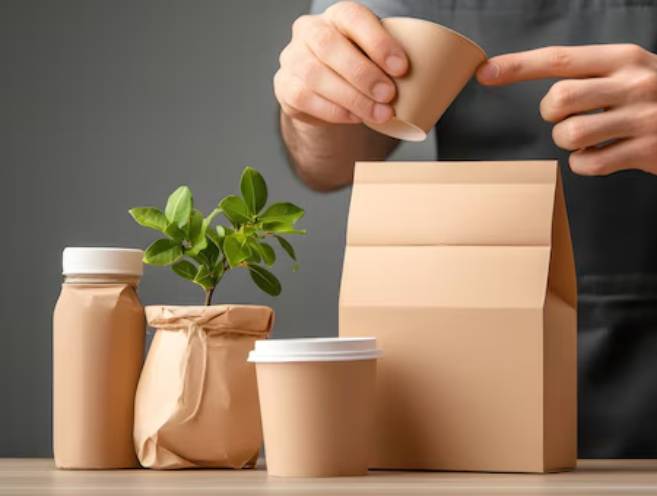



Discovery - Understanding the Brief Properly
We begin every packaging project with a discovery session that establishes the full context of the brief. Who is the target customer? Where will the product be sold - modern trade, general trade, ecommerce, export, or a combination? What is the retail price point and what does the packaging need to communicate about the product's value relative to that price? What are the direct competitors on the shelf and how are they packaging their products? What are the regulatory requirements specific to this product category? What are the structural constraints - is the packaging format already determined, or is format selection part of the brief?
This discovery is not a formality. The answers to these questions directly determine every significant design decision that follows. A food product in the premium tier of a modern trade category needs a completely different visual language from the same product positioned as a value option in general trade. A pharmaceutical packaging brief has regulatory constraints that a cosmetics brief does not. A product designed for ecommerce has legibility requirements at thumbnail size that a shelf product does not.

Competitive and Category Analysis
We look at the category before we design for it. What do the market leaders' packages look like? What colours, typography styles, and imagery approaches have become the visual clichés of the category - and how can this brand occupy a distinctively different position while still reading as credible within the category?
In some categories, differentiation means breaking from the category norm. In others, it means being a premium version of the category language. In both cases, the decision needs to be informed by actually looking at what is on the shelf rather than designing in isolation.

Structural Format and Dieline
For packaging that involves a carton, a box, a pouch, a tube, or any three-dimensional format, the structural dieline - the flat template that defines how the package folds, seals, and assembles - needs to be either specified or confirmed before design work begins. Designing a label for a bottle without knowing the exact bottle dimensions and label area produces artwork that does not fit the physical package. Designing a carton without the correct dieline produces artwork that does not fold correctly.
We work with client-provided dielines where the packaging structure is already determined, or we develop dielines in coordination with the client's packaging supplier for new packaging formats. We do not design packaging without knowing what it will be printed on and how it will be assembled.

Design Development
With the brief, the category analysis, and the structural format established, design development begins. We produce multiple design concepts - distinct directions that each answer the brief from a different creative premise - and present them with explanation of the strategic rationale behind each direction.
The design development process for packaging is more iterative than for many other design briefs because the number of variables is higher. The front face of the pack is the primary design canvas, but the design also needs to work on the side panels, the back panel, the top and bottom, and any secondary packaging. Typography needs to be legible at actual production size, not just on a screen where everything can be zoomed. Colour needs to be consistent across the pack, which on some printing processes requires careful specification of colour build in CMYK.

Regulatory Content Integration
Packaging for consumer products in India is regulated. The specific regulations depend on the product category. Food products are governed by FSSAI regulations, which specify what must appear on the label - ingredients list, nutritional information, FSSAI licence number, best before date format, net weight in prescribed font sizes, and more. Cosmetics and personal care products are governed by Bureau of Indian Standards regulations and the Drugs and Cosmetics Act for products that cross the cosmetics-pharmaceuticals boundary. Pharmaceutical packaging is governed by CDSCO and Schedule T of the Drugs and Cosmetics Act. Health supplements have their own labelling requirements under FSSAI's Foods for Special Dietary Use regulations.
We design packaging with full awareness of the regulatory requirements for the specific product category. Regulatory content is not a last-minute addition that gets crammed into whatever space is left on the pack. It is planned as part of the design from the beginning, with the correct content hierarchy, the correct font sizes for mandatory declarations, and the correct placement of regulatory marks and licence numbers.

Print Production File Preparation
A packaging design file that has not been prepared for print production will cause problems at the printer. The most common issues are: colours specified in RGB rather than CMYK for print processes that require CMYK; insufficient bleed on artwork that goes to the edge of the pack; fonts that are not outlined or embedded and will substitute incorrectly at the printer; image resolution that is adequate for screen but insufficient for print; and colour profiles that produce unexpected results on the specific substrate being used.
We prepare all packaging artwork for print production as a standard part of every project. Final files are delivered in print-ready format - typically PDF/X-4 for digital and offset printing, or layered AI/INDD files with all fonts outlined and images embedded, along with detailed print specifications that tell the printer exactly what colour profile, resolution, bleed, and finishing requirements apply to the file.



Food and Beverage Packaging
Mumbai has a large and diverse food processing industry - from artisanal food brands in Bandra and Khar selling premium snacks and specialty ingredients, to FMCG manufacturers in Chembur and Ghatkopar producing high volumes of packaged foods for national distribution. Both ends of this spectrum need packaging that sells, but the design briefs are completely different.
For premium artisanal food brands, the packaging needs to communicate the craft, the provenance, and the premium positioning of the product. For FMCG manufacturers, the packaging needs to communicate value, familiarity, and shelf visibility. We have designed food packaging across both ends of this spectrum and across every category within it: snacks and namkeen, spices and masalas, ready-to-eat products, beverages, dairy alternatives, health foods, and confectionery.
FSSAI compliance is mandatory and non-negotiable for all food packaging. We design food packaging with the full FSSAI declaration requirements integrated into the design - not as a footnote, but as a considered element of the information hierarchy on the pack.

Beauty, Skincare, and Personal Care Packaging
Mumbai's D2C beauty and skincare market is one of the most active in India. New brands launch regularly, competing with established domestic players and international brands that have strong retail and digital distribution. In this environment, packaging design is one of the primary ways a new brand establishes its positioning and builds its credibility with first-time buyers.
Beauty packaging has specific design requirements. The ingredients list and usage instructions need to be legible on a small label. The claims on the packaging - "dermatologically tested," "paraben free," "SPF 50+" - need to be accurate and positioned correctly in the context of applicable regulations. Colour and finish choices need to reproduce consistently across different packaging formats - a glass bottle, a pump bottle, a tube, and a carton that forms a set - even when those formats are produced by different suppliers.
We have designed packaging for skincare ranges, haircare lines, colour cosmetics, and personal care products for Mumbai-based brands at various stages of growth - from first-time founders launching their first SKU to established brands refreshing a range that has been in market for several years.

Health Supplements and Nutraceuticals
The health supplement category is one of the fastest-growing in Indian consumer goods, and Mumbai has a concentration of brands in this space. Packaging for health supplements needs to navigate specific regulatory requirements - FSSAI's Foods for Special Dietary Use framework for most supplements, with specific rules around health claims and the use of nutritional and functional claims on labels.
Supplement packaging also needs to communicate trust and scientific credibility to a consumer who is making a decision about something they will put in their body. The design language of this category in India has evolved significantly in recent years, moving away from the clinical aesthetics of pharmaceuticals toward a more accessible, lifestyle-oriented visual language. We design supplement packaging that sits correctly in this evolved category language while meeting all applicable regulatory requirements.

Pharmaceutical Packaging
Pharmaceutical packaging in India is regulated under the Drugs and Cosmetics Act, with specific requirements from CDSCO and the applicable Schedule T guidelines for how medicines must be labelled. Beyond the regulatory requirements, pharmaceutical packaging needs to communicate absolute clarity - the right product, the right strength, the right dosage - in a way that eliminates any possibility of confusion.
We design pharmaceutical packaging with a focus on regulatory compliance and communication clarity. We work with both prescription and OTC pharmaceutical clients in Mumbai, designing cartons, labels, blister artwork, and outer packaging that meet applicable regulatory standards and communicate correctly in the markets they are intended for.

D2C Ecommerce Packaging - The Unboxing Experience
For D2C brands selling through their own Shopify store or through ecommerce marketplaces, packaging serves a purpose that traditional retail packaging does not: the unboxing experience. When a customer receives a delivery, the outer packaging, the inner packaging, the way the product is presented inside the box, the inclusion of any inserts or personalised notes - all of this is part of the brand experience at a moment when the customer is paying full attention.
A memorable unboxing experience generates social media content. It builds the emotional connection that turns a first-time buyer into a repeat customer. It communicates the quality and care of the brand in a way that the product listing page alone cannot.
We design D2C ecommerce packaging - outer boxes, inner packaging, tissue paper treatment, inserts, and product packaging - as a coordinated system that creates a consistent brand experience from the moment the delivery arrives to the moment the product is in the customer's hands. This work is developed in close coordination with the brand identity and, for clients building their ecommerce presence with us, with the website and product photography - so that the packaging, the website, and the product imagery all feel like they belong to the same brand.

Export Packaging
Mumbai is one of India's primary export hubs, and many Mumbai manufacturers and brands export to markets in the Gulf, the UK, the US, Southeast Asia, and Africa. Export packaging has requirements that differ from domestic packaging: mandatory country of origin declarations, market-specific regulatory requirements (the EU's labelling regulations are different from the US FDA's and different again from the Gulf Cooperation Council standards), language requirements for multilingual markets, and in some cases specific environmental or recyclability certifications required by the target market.
We have designed export packaging for Mumbai manufacturers and brands, developing market-specific variants of existing packaging designs or creating new designs specifically for export markets. For clients selling in multiple export markets simultaneously, we develop a packaging architecture that allows market-specific variations to be produced efficiently - consistent design system with market-specific regulatory content - rather than developing entirely separate designs for each market.

Sustainable Packaging Design
Sustainability in packaging is increasingly a commercial requirement rather than a premium differentiator. Retail buyers at modern trade chains in Mumbai - and international buyers in export markets - are actively asking about the environmental profile of supplier packaging. Consumer awareness of packaging waste, particularly plastic packaging, is growing. And regulatory pressure on single-use plastics in India is increasing.
We design packaging with sustainability as a considered element of the brief - exploring material alternatives that reduce plastic use where appropriate, designing for mono-material construction that improves recyclability, specifying inks and coatings that are compatible with recycling processes, and helping clients communicate their sustainability credentials accurately and compliantly on the packaging itself.