

Choosing the right website development company in Mumbai is an important decision for any business planning to build or redesign its website. A business website is more than an online brochure. It can influence how customers discover your business, understand your services, contact your team, and ultimately decide whether to work with you.
Mumbai has a large and competitive web development market, with agencies, freelancers, software companies, and specialized development teams offering different services and pricing models. Because of this, comparing providers only on the basis of price can make the decision difficult.
The right approach is to evaluate a website development company based on its experience, technical capabilities, design process, SEO understanding, communication, maintenance support, security practices, and ability to understand your business objectives.
This guide explains the key factors businesses should consider when choosing a website development company in Mumbai and how to evaluate different options before starting a project.
1. Understand What Your Business Website Actually Needs
Before contacting a website development company, define what you want your website to accomplish.
Different businesses require different types of websites. A local service business may need a professional company website with service pages, contact forms, testimonials, and location information. An e-commerce business may require product catalogs, payment gateways, shipping integrations, inventory management, and customer accounts.
A professional website project should therefore begin with business objectives rather than technology.
Ask yourself:
- What is the primary purpose of the website?
- Who are your target customers?
- Do you need leads, online sales, bookings, or brand awareness?
- How many pages will the website require?
- Will you publish blogs or other content regularly?
- Do you need third-party integrations?
- Do you need an online payment system?
- Will multiple people manage the website?
- Do you expect the website to grow in the future?
Having clear answers helps you communicate your requirements to potential developers.
A website development company in Mumbai should be able to understand these requirements and translate them into a practical website structure.
2. Check the Company’s Website Development Experience
Experience is one of the first factors to evaluate when comparing website development providers.
However, experience should not be measured only by the number of years a company has existed. Look at the type of projects it has completed and whether those projects are relevant to your business.
For example, an agency specializing primarily in small business websites may approach a large e-commerce project differently from a company that regularly develops complex online stores.
Look for experience in:
- Business websites
- WordPress development
- WooCommerce
- E-commerce websites
- Custom website development
- Responsive web design
- Website redesign
- Website maintenance
- SEO-friendly development
- Third-party integrations
Reviewing previous projects can also help you understand the company’s design quality, technical capabilities, and attention to detail.
A suitable website development company in Mumbai should be able to explain how its previous experience relates to your requirements rather than simply presenting a portfolio.
3. Review Their Portfolio and Previous Projects
A portfolio can tell you a lot about a web development company’s capabilities.
Instead of looking only at whether a website looks attractive, examine how the websites work.
Check whether the websites are:
- Mobile-friendly
- Easy to navigate
- Fast to load
- Professionally structured
- Visually consistent
- Easy to understand
- Designed around clear calls to action
- Suitable for the target audience
If possible, visit several websites from the portfolio on both desktop and mobile devices.
Also look at businesses from industries similar to yours. A company that has experience working with businesses similar to yours may already understand common customer journeys, content structures, and conversion requirements.
At the same time, a strong portfolio should demonstrate adaptability rather than using exactly the same design for every client.

4. Evaluate Their Technical Skills
Website development involves much more than visual design.
The development technology should match your website’s requirements, budget, expected traffic, functionality, and future plans.
Depending on the project, a development company may work with technologies such as:
- WordPress
- WooCommerce
- Shopify
- Custom PHP development
- HTML, CSS and JavaScript
- Custom APIs
- Database-driven applications
- Third-party integrations
For many small and medium-sized businesses, WordPress can provide a flexible content management system, while WooCommerce can support e-commerce requirements. More complex businesses may require customized development.
The important point is that the development company should recommend technology based on your actual requirements rather than choosing a platform simply because it is familiar to the developer.
Ask the company why a particular technology is suitable for your project and what limitations you should expect.
5. Make Sure They Understand SEO-Friendly Website Development
A website can look excellent and still struggle to attract organic traffic if SEO considerations are ignored during development.
SEO should not be treated as something added only after the website is finished. Technical and structural decisions made during development can affect search visibility.
A website development company should understand important SEO-related elements such as:
- Logical website architecture
- Clean URLs
- Proper heading structure
- Mobile responsiveness
- Website speed
- Image optimization
- Internal linking
- XML sitemap compatibility
- Metadata implementation
- Structured content
- Indexability
- Core technical SEO requirements
Your website development company in Mumbai should also understand the relationship between website structure and future SEO activities.
For example, if important service pages are difficult to access through the site’s navigation, both users and search engines may have difficulty discovering them.
6. Compare the Development Process Before Comparing Prices
Price is important, but it should not be the only factor used to select a developer.
Two companies may provide very different quotes because their project scope, development process, design quality, testing procedures, support, and technology choices are different.
Before comparing prices, compare what each proposal includes.
Look at:
- Discovery and requirement analysis – Does the company understand your business objectives?
- Website planning – Does it prepare a sitemap or content structure?
- UI/UX design – Is design created specifically for your business?
- Development – What technology and functionality are included?
- Responsive development – Will the website work properly across devices?
- Testing – Does the company test forms, links, navigation and functionality?
- SEO setup – Are basic technical SEO elements included?
- Launch – Does the company assist with deployment and configuration?
- Training – Will your team learn how to manage the website?
- Maintenance – Is post-launch support available?
A detailed proposal makes it easier to compare providers on the same basis.
7. Ask About Mobile-Friendly and Responsive Design
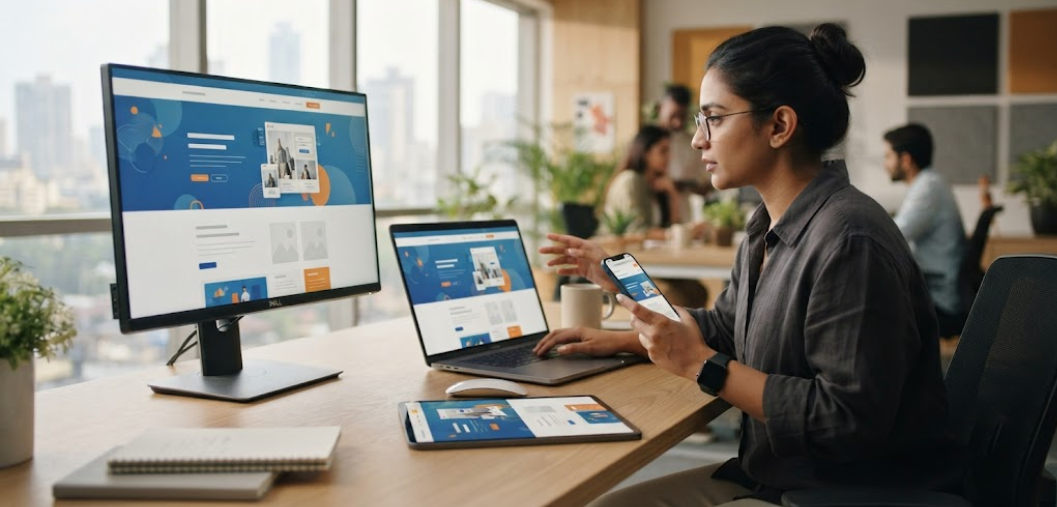
A modern business website must work across different screen sizes.
Customers may visit your website using smartphones, tablets, laptops, or desktop computers. A responsive website adapts its layout, typography, navigation, images, buttons, and content to different screen sizes.
When reviewing a development company’s previous work, don’t check only the desktop version.
Test the website on a smartphone and look at:
- Navigation
- Font readability
- Button sizes
- Image display
- Contact forms
- Page spacing
- Product layouts
- Menu functionality
- Loading experience
A professional website development company in Mumbai should treat responsive development as a standard requirement rather than an optional feature.
8. Check Website Speed, Security and Performance Practices
Website performance can affect both user experience and business outcomes.
Slow pages can make visitors leave before they reach important information. Development practices therefore need to consider page weight, image optimization, caching, code quality, hosting configuration, and third-party scripts.
Security is equally important.
Depending on the website, security considerations can include:
- SSL configuration
- Secure administrator accounts
- Software updates
- Plugin management
- Backups
- Malware monitoring
- Form security
- Secure payment integrations
- Access control
Ask your potential website development company in Mumbai what measures it uses to protect websites and maintain performance after launch.
You should also clarify who will be responsible for updates, backups, security monitoring, and technical maintenance.
9. Evaluate Communication and Project Management
Good communication can significantly affect the website development process.
Website projects involve multiple stages, including content collection, design approvals, development, revisions, testing, and launch. Poor communication can create unnecessary delays.
Before starting, ask:
- Who will be your primary contact?
- How frequently will project updates be provided?
- How will revisions be handled?
- What happens if the project scope changes?
- How will approvals be managed?
- What is the expected development timeline?
- What information does the company need from you?
A professional website development company in Mumbai should have a clear process for communication and approvals.
You should also be cautious about extremely short delivery promises if the project requires substantial customization. A realistic timeline depends on the number of pages, content availability, integrations, revisions, and functionality.
10. Understand Ownership, Hosting and Post-Launch Support
Before signing a website development agreement, clarify who owns the website and its associated assets.
Important questions include:
- Who owns the domain?
- Who controls the hosting account?
- Who owns the website content?
- Who has administrator access?
- Are design files provided?
- Are paid plugins or licenses included?
- Can another developer maintain the website later?
- What happens after the support period ends?
These details can prevent problems in the future.
You should also ask about post-launch support. A website may need updates, bug fixes, content changes, plugin updates, security monitoring, backups, or performance improvements after launch.
A reliable website development company in Mumbai should clearly explain its maintenance and support options rather than leaving these details unclear.
11. Questions to Ask Before Hiring a Website Development Company
Before making your final decision, prepare a list of questions and ask the same core questions to each shortlisted company.
Key Questions
- How much experience do you have with businesses like mine?
- Can I see relevant website projects you have completed?
- Which platform do you recommend and why?
- Will the website be responsive?
- How will you approach website speed?
- Will the website be developed with SEO in mind?
- What is included in the project quotation?
- How many design revisions are included?
- Who provides the website content?
- What is the estimated development timeline?
- Who owns the website after completion?
- Will I receive administrator access?
- What happens after the website launches?
- Do you provide website maintenance?
- What additional costs should I expect?
The answers can help you understand whether the company has a structured process and whether its services match your requirements.
Conclusion
Choosing the right Website Development Company in Mumbai is an important step toward building a professional and effective online presence. Instead of comparing companies only by price, businesses should consider experience, technical expertise, responsive design, SEO knowledge, website performance, security, communication, ownership, and post-launch support.
A reliable development partner should understand your business goals and create a website that is not only visually professional but also easy to use, mobile-friendly, SEO-ready, secure, and capable of growing with your business.
Before making a final decision, review portfolios, compare project proposals, ask the right questions, and clearly understand what is included in the development and maintenance process. Taking these steps can help you choose a Website Development Company in Mumbai that delivers a website aligned with your business objectives and long-term digital growth.

